
Creative people are people who take risks. They go with their gut feelings. They color outside the lines. They break rules. They mess around and play with no set goal in mind. They follow strange ideas just to see what will happen.
An artist drips paint on a canvas.
A musician fiddles around with a combination of notes.
A writer plays around with characters, plot elements, and words.
And when an idea pops into their head, they pursue it.
Does intuition always work for a writer? No. But many times going with a wild idea will add that spark, uniqueness, or surprise that makes a story idea pop.
When Should Writers Use Intuition?
Following one’s intuition works best at the start of the writing process. Use intuition when:
- Inventing character traits
- Coming up with story events and ideas
Intuition and Character Traits
The main characters of a novel need to be unique not only from one another, but also from every other main character ever written. To create such a character, we need to invent a new combination of character backstory, character appearance, skills, and habits, and ways that character interacts with their world.
This is the method I used to come up with the heroine of my most recent book Lost Beneath the Tide. I knew my heroine would be a marine biologist from New York City. Using the hodgepodge bags explained below, I added to her backstory: an annoying, clingy mother, pink hair, a cleft palate, and an in-your-face attitude.
How to Use the Hodgepodge Method for Character Creation
- On slips of paper, write down as many different and unique backstories* as possible that will work for your planned story. If you already have chosen a backstory then just use that. Put them in a bowl or bag.
- On another set of slips, write down wild ideas for habits, skills, and appearance*. Put these in another bowl or bag.
- On the final set of strips, write down interesting and unusual ways a character can interact with their world, e.g. always positive like Pollyanna, constantly sad like Eeyore, ricocheting from anger to depression, being a problem solver, and so on*. Put these in a bowl or bag as well.
*These ideas can be invented by you or drawn from real life, books, and movies you have seen.
Now, pull a strip from each of the bags and see who turns up. Continue creating new combinations. If none turn up that you like, put the papers back into their respective containers. Add more to each if you wish, then start pulling again. Continue until one of the combos strikes you as being unique and having potential for your story.
Write up a character interview or description of that person. Write them into a scene and see how it works out. Repeat for each of your main characters.
To add an element of play, use different color papers for each category and put all them in one container. Dump them out and draw one or more of each color to create a whole cast of unique characters.
NOTE: Elements can be added to Hodgepodge Bags as you think of new elements. The bags can be used over and over.
Hodgepodge Example
Backstory
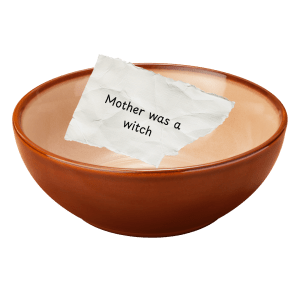
Traits

World View
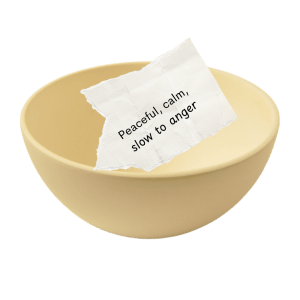
Intuition and Plotting
Coming up with the right story events is key to producing a page-turner. Once you have settled on your unique characters, it’s time to brainstorm and apply intuition in selecting what will happen to them in the story. Using the prompts below, brainstorm possible things that might occur related to your character and story.
To ensure those creative juices are warmed up, make up at least six events for each prompt. Then play around with the ideas until your intuition helps you decide. To add an element of fun, make sketches or find photos that illustrate your choices.
- Pleasant events
- Loving events
- Dangerous events
- Sad events
- Heartbreaking events
- Thrilling events
- Trapped events
- Past events
- Mysterious events
- Confronting the enemy events
- Fight/Battle events
- Making amends events
Making Intuition Flourish
Intuition works best when the stress is low and the activity feels like play. That’s why these two methodologies are hands-on and involve color, illustrations, and manipulating paper scraps in fun ways.
“Your intuition knows what to write, so get out of the way.”
Ray Bradbury
Discover more from ZARA WEST'S JOURNAL
Subscribe to get the latest posts sent to your email.

I can’t claim to have used any strategy to come up with the ending of my book that’s coming out in September, Hidden Treasures. When it came time to wrap it up, the ending I had assumed would work felt blah. Reading back over what I’d written, I thought I saw a possibility and went with it. I had to go back and tweak things in places, but when I did, the twist made a satisfying (and somewhat funny) denouement. I crossed my fingers and sent it in. My editor liked the twistiness.
LikeLike
Thank you for sharing that sparkling moment of using your intuition! Zara
LikeLike